
Description
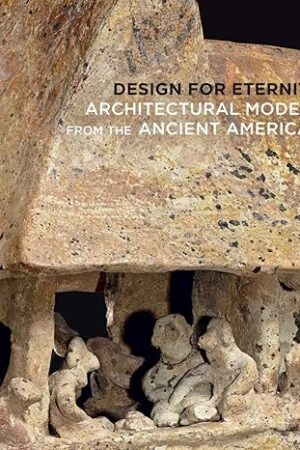
From the first millennium B.C. until the arrival of Europeans in the 16th century, artists from across the ancient Americas created small-scale architectural effigies to be placed in the tombs of important individuals. These works in stone, ceramic, wood, and metal range from highly abstracted, minimalist representations of temples and houses to elaborate complexes populated with figures, conveying a rich sense of ancient ritual and daily life. Although described as models, these effigies were created not so much as reflections or prototypes of existing structures, but rather as critical, conceptual components of funerary practice and beliefs about an afterlife.
![Ancient Bronzes through a Modern Lens: Introductory Essays on the Study of Ancient Mediterranean and Near Eastern Bronzes [Paperback] Ebbinghaus, Susanne; Anderson, Lisa; Bewer, Francesca G.; Bielfeldt, Ruth; Eremin, Katherine; Hemingway, Seán; Lie, Henry; Mattusch, Carol C.; Riederer, Josef and Staehli, Adrian](https://artwheelshop.com/wp-content/uploads/2025/10/516k-q2VTKL._SY385_-1.jpg)
![Stuart Walker: Modernist Master Revealed (A Retrospective Exhibition) [Paperback] Payne, Aaron; Stuart Walker](https://artwheelshop.com/wp-content/uploads/2025/10/91lyPzkoVL._SY342_-1-300x342.jpg)
![Swedish Wooden Toys (Bard Graduate Center for Studies in the Decorative Arts, Des) [Paperback] Ogata, Amy F. and Weber, Susan](https://artwheelshop.com/wp-content/uploads/2025/10/61pbgkyHjxL._SY385_-1-300x385.jpg)
![Make It New: Abstract Painting from the National Gallery of Art, 19501975 [Paperback] Cooper, Harry; Breslin, David and Jolly, Matt](https://artwheelshop.com/wp-content/uploads/2025/10/61i1k-PWaAL._SY522_-1-300x450.jpg)
![The Wyvern Collection: Medieval and Later Ivory Carvings and Small Sculpture [Hardcover] Williamson, Paul](https://artwheelshop.com/wp-content/uploads/2025/10/61YR4fz0JsL._SY466_-1-300x450.jpg)
![Angels and Wild Things: The Archetypal Poetics of Maurice Sendak [Paperback] Cech, John](https://artwheelshop.com/wp-content/uploads/2025/10/91YTCMrs8jL._SY385_.jpg)
![George Inness and the Visionary Landscape [Hardcover] Bell, Adrienne Baxter](https://artwheelshop.com/wp-content/uploads/2025/10/615PhhKthsL._SY342_-1.jpg)
![A Divine Light : Northern Renaissance Paintings From the Bob Jones University Museum & Gallery [Paperback] Kennedy, Trinita & John Nolan](https://artwheelshop.com/wp-content/uploads/2025/10/517Sf6pRpFL._SY342_-1.jpg)