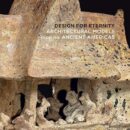

Description
From the first millennium B.C. until the arrival of Europeans in the 16th century, artists from across the ancient Americas created small-scale architectural effigies to be placed in the tombs of important individuals. These works in stone, ceramic, wood, and metal range from highly abstracted, minimalist representations of temples and houses to elaborate complexes populated with figures, conveying a rich sense of ancient ritual and daily life. Although described as models, these effigies were created not so much as reflections or prototypes of existing structures, but rather as critical, conceptual components of funerary practice and beliefs about an afterlife.



![Roberto Capucci: Art into Fashion [Hardcover] Blum, Dilys E.](https://artwheelshop.com/wp-content/uploads/2025/10/61poixzCplL._SY522_-1-300x450.jpg)
![Splendor, Myth, and Vision: Nudes from the Prado [Hardcover] Loughman, Thomas J.; Morris, Kathleen M.; Yeager-Crasselt, Lara; Burke, Jill and Portús, Javier](https://artwheelshop.com/wp-content/uploads/2025/10/61GM3dFcJJL._SY425_-1-300x425.jpg)
![Angels and Wild Things: The Archetypal Poetics of Maurice Sendak [Paperback] Cech, John](https://artwheelshop.com/wp-content/uploads/2025/10/91YTCMrs8jL._SY385_.jpg)